ARTICLE
What dogs can teach us about living with chronic pain
If you’ve ever shared your life with a dog, you’ll know something remarkable happens when you walk through the door.
They don’t ask whether you’ve had a productive day.
They don’t care if the house is tidy, your inbox is full, or you’ve achieved everything on your to-do list.
They are simply delighted that you’re home.
For many people living with chronic pain, this unconditional acceptance can be surprisingly powerful.
Living in a smaller world
Chronic pain has a way of shrinking life.
Many people tell me they have gradually stopped doing the things they once loved. They worry about whether they’ll cope with the journey, whether they’ll flare afterwards, or whether they’ll have to leave early.
Over time, life can become smaller and smaller.
A dog has a gentle way of encouraging the opposite.
They don’t ask for a marathon.
They simply ask if you’d like to come outside.
Some days that might be a walk around the block.
Some days it might simply be sitting together in the garden.
The important thing isn’t the distance. It’s reconnecting with the world beyond the four walls of pain.
The nervous system notices safety
One of the things we now understand about chronic pain is that the nervous system is constantly assessing whether we are safe.
When it perceives danger, pain often becomes louder.
When it experiences safety, calm and connection, it can begin to settle.
Dogs are remarkably good at creating those moments of safety.
Stroking a familiar dog, feeling their warmth beside you, hearing steady breathing or watching them sleep peacefully can all help signal to the nervous system that, in this moment, there is no immediate threat.
Many studies have shown that interacting with animals can reduce stress hormones and increase oxytocin—the hormone involved in trust, bonding and emotional connection. These aren’t cures for chronic pain, but they may help create the conditions in which the nervous system becomes a little less guarded.
They help us notice the present
Pain often pulls us into the future.
“What if tomorrow is worse?”
“What if this never gets better?”
Dogs have no interest in next Tuesday.
They are fascinated by the butterfly in front of them.
The smell of wet grass.
A squirrel.
A stick that is apparently the greatest stick ever discovered.
Being around them gently reminds us that life still exists outside our thoughts.
Gentle movement counts
Many people believe exercise only “counts” if it’s hard work.
In reality, for someone living with persistent pain, gentle, regular movement is often far more helpful than occasional bursts of activity.
Walking a dog naturally encourages pacing.
The pace is slower.
There are pauses.
There are opportunities to stop and watch the world.
This is often exactly the sort of movement a sensitive nervous system tolerates best.
Companionship without explanation
One of the hardest parts of living with chronic pain is feeling misunderstood.
Friends may ask why you’re still in pain.
Family members may struggle to understand why yesterday was manageable but today isn’t.
Dogs ask none of these questions.
They don’t need an explanation.
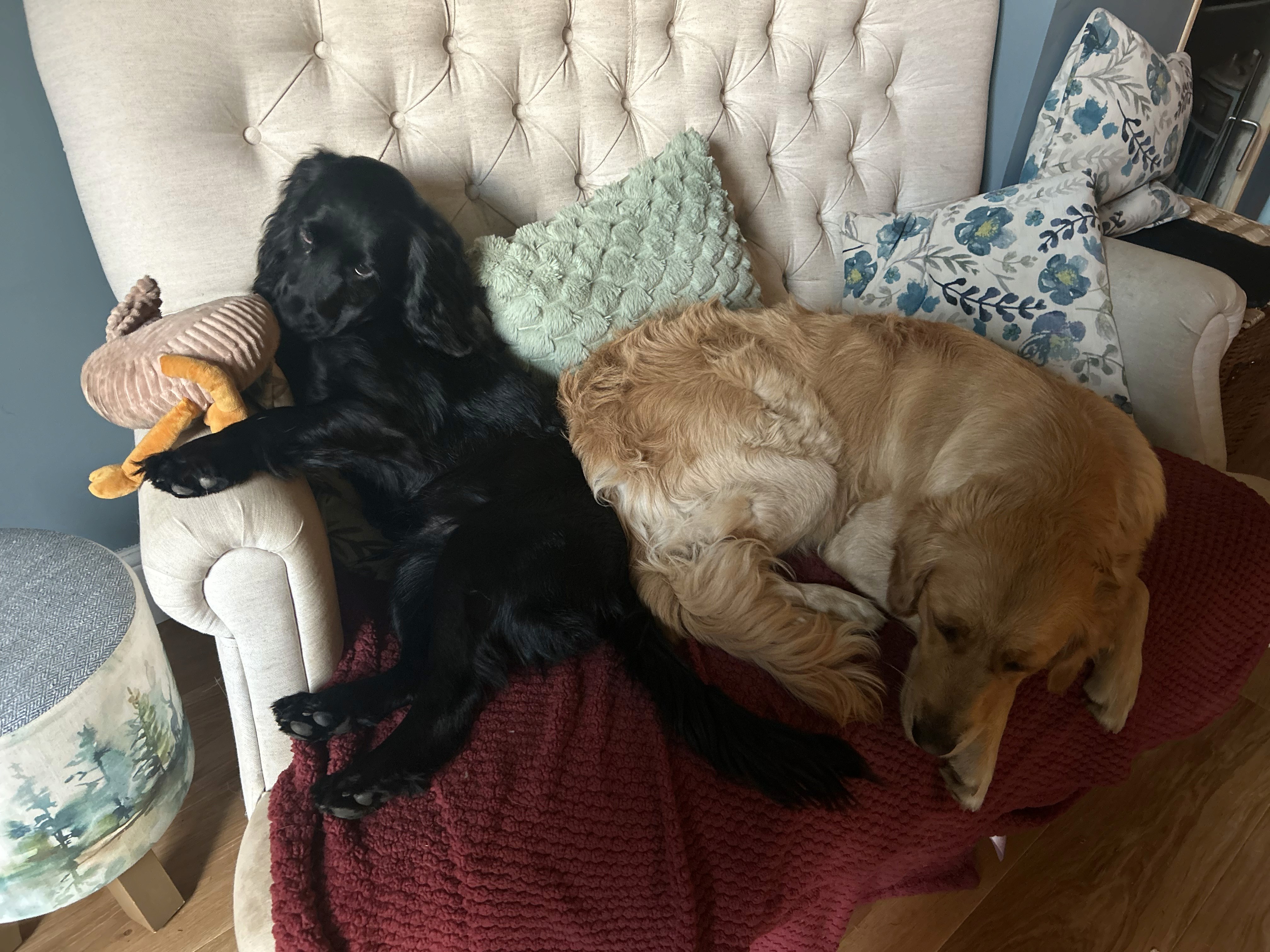
Sometimes simply having another living creature quietly sitting beside you is enough.
If you don’t own a dog…
You don’t need to.
Perhaps you could borrow a friend’s dog for a gentle walk.
Volunteer at a local rescue centre.
Spend time with a family member’s pet.
Or simply enjoy watching dogs in the park while sitting on a bench with a cup of coffee.
The benefit often comes not from ownership, but from connection.
A small prescription
As pain specialists, we prescribe medicines, injections and therapies because they can all play an important role.
But we also know that healing rarely comes from one intervention alone.
Sometimes it comes from rebuilding a life that contains moments of joy, purpose, movement and connection.
For many people, a dog quietly provides all four.
Not because they cure pain.
But because they gently remind us that we are so much more than our pain.
So if you happen to have a wagging tail waiting for you this evening, perhaps let them lead the way.
The walk doesn’t need to be long.
The conversation doesn’t need to be complicated.
Sometimes the best medicine is simply being together.
Back to articles