ARTICLE
Why feeling better after an injection is often the beginning of treatment, not the end
When you have lived with pain for months or years, having an injection that reduces it can feel like an enormous relief.
Perhaps you can suddenly walk further. Getting out of a chair is easier. You can turn over in bed without waking. Your leg no longer hurts every time you take a step.
Understandably, the first question is often:
“How long will it last?”
It is an important question.
But there is another one that I think can be even more useful:
“What can we help you regain while the pain is quieter?”
Because for many people, the real value of a successful pain intervention isn't simply a period with less pain.
It is the opportunity that period creates.
Pain changes more than how we feel
When something hurts repeatedly, we naturally adapt.
You may stop walking as far. Perhaps you avoid bending, twisting or lifting. You might stop exercising, gardening or playing a sport. Muscles that haven't been used normally for some time can become weaker, while other muscles work harder to compensate.
Sometimes these changes happen consciously.
Often they don't.
Over time, the problem can become more complicated than the original painful structure.
There may be pain, but also weakness, stiffness, reduced fitness, altered movement patterns and an understandable loss of confidence in what the body can safely do.
This doesn't mean the pain is psychological.
It means that living with pain changes how we use our bodies.
And reducing the pain doesn't automatically reverse those changes.
What an injection can — and can't — do
Pain interventions have different purposes.
An epidural or selective nerve root injection may reduce inflammation and pain associated with an irritated spinal nerve.
A sacroiliac joint injection may help determine whether a particular joint is contributing to someone's pain as well as potentially providing relief.
A medial branch block is primarily a diagnostic procedure, helping us understand whether the small facet joints of the spine are likely to be an important source of pain.
Other nerve blocks and injections have their own particular roles.
What none of these procedures can do is rebuild muscle strength, restore cardiovascular fitness or automatically return confidence in movement.
That is where rehabilitation becomes important.
Turning pain relief into something useful
If an intervention reduces pain, even temporarily, we may have created a window of opportunity.
Movements that were previously too painful may become possible.
Walking may become easier.
A physiotherapy programme that was previously intolerable may suddenly become manageable.
You may sleep better and have more energy.
Perhaps most importantly, you may begin to discover that your body is capable of more than it has been able to do recently.
The aim isn't to squeeze as much exercise as possible into the period before the injection “wears off”.
It is to use the opportunity thoughtfully.
The temptation to do everything at once
There is a very understandable phenomenon after a successful injection.
You wake up feeling better.
So you clean the house.
Then you go shopping.
Then you tackle the garden.
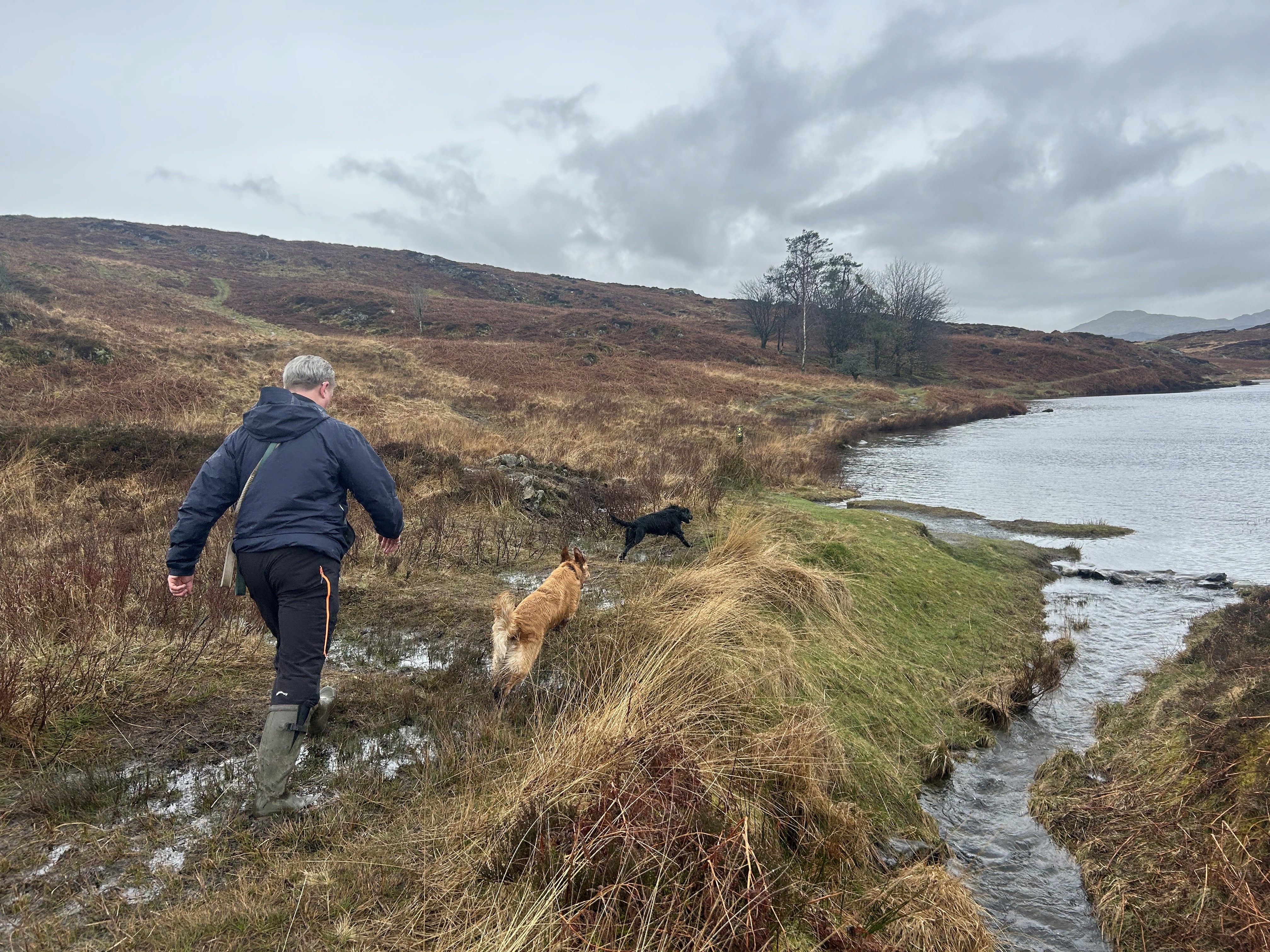
Then, because you're still feeling surprisingly good, you take the dog for the longest walk you've managed in six months.
And the following day everything hurts.
It can be frightening. People sometimes assume they have damaged something or that the injection has suddenly stopped working.
Often neither is true.
A body that has been relatively inactive because of pain still needs time to rebuild its capacity, even when the original pain has improved.
The answer is usually progression rather than protection.
Start using the improvement, but build gradually.
The opposite temptation: protecting the improvement
Some people respond in exactly the opposite way.
The injection has worked and they are frightened of doing anything that might make the pain return.
They become extremely careful.
They avoid movements that previously hurt and try to preserve the benefit for as long as possible.
That is understandable too.
But unless you have specifically been advised to restrict an activity, successful pain relief is generally something we want to use, not protect.
The aim is not simply to create a quieter body.
It is to create a more capable one.
Rehabilitation doesn't have to mean starting again
Many people who come to Wye Sanctuary already have a physiotherapist or another practitioner they know well.
That relationship matters.
You may have worked together for months or years. They know your body, what you have already tried, what tends to cause problems and what you are hoping to return to.
Having an intervention does not mean you need to abandon that relationship and start again with somebody new.
At Wye Sanctuary, I work with physiotherapists across Herefordshire and the surrounding area and can help arrange rehabilitation where needed.
But I am equally happy to work with your preferred practitioner.
With your agreement, I can liaise with them about the intervention you have had, what we found, what we are hoping to achieve and whether there are any particular considerations for rehabilitation.
That means you can continue working with someone you already know and trust, while ensuring that the different parts of your treatment fit together.
Good pain care should feel joined-up.
What should rehabilitation actually involve?
There isn't a single rehabilitation programme that is right after every injection.
For one person, the immediate priority may simply be increasing their walking.
For another it may be rebuilding strength around the hip or shoulder.
Someone else may need to work on spinal mobility, balance, endurance or gradually returning to work.
And sometimes the goal is wonderfully ordinary: being able to garden again, walk the dog, play with grandchildren or get through a day without constantly planning around pain.
Rehabilitation should therefore be built around what matters to you, not simply around a set of exercises.
A good rehabilitation plan will usually progress gradually as your capacity improves.
Don't be frightened by every ache
Rehabilitation after persistent pain is rarely completely symptom-free.
If muscles haven't been challenged for some time, they may ache when they begin working again.
Increasing activity can sometimes temporarily increase symptoms.
That doesn't automatically mean you are causing damage or that the intervention has failed.
Part of rehabilitation is learning to distinguish between the familiar pain we were trying to treat, the normal consequences of increasing activity, and symptoms that genuinely need reassessment.
That distinction isn't always obvious.
This is another reason why having a clinician or therapist who knows your story can be valuable.
What did the injection teach us?
Not every injection produces weeks or months of pain relief.
Sometimes the benefit is brief.
Sometimes it is partial.
And sometimes an injection doesn't help at all.
That can be disappointing, but it doesn't necessarily mean that the procedure was pointless.
Some interventions are deliberately diagnostic.
If temporarily numbing a particular nerve dramatically changes someone's pain and function, that tells us something.
Equally, if an accurately performed diagnostic injection makes no difference, that can tell us that we need to look elsewhere.
I am therefore interested not only in how much your pain changed, but in what you could do differently afterwards.
Could you walk further?
Stand for longer?
Sleep differently?
Move more freely?
Do something that reliably caused pain before?
Those functional changes can be extremely useful when deciding what should happen next.
What if the pain comes back?
Many pain interventions are not permanent treatments.
The effect may gradually diminish.
That doesn't necessarily mean you are back where you started.
If the period of reduced pain allowed you to become stronger, fitter, more mobile or more confident, some of those gains may remain even when pain begins to return.
And if pain does recur, we can reassess.
Sometimes an intervention can be repeated. Sometimes another treatment is more appropriate. Sometimes the rehabilitation itself has changed what is needed.
Pain management is rarely a single event.
It is usually a process of understanding what helps, learning from the response and deciding what makes sense next.
The injection is only part of the treatment
It is tempting to think of a pain injection as the treatment and rehabilitation as something that happens afterwards.
I prefer to think of them as parts of the same plan.
An intervention may reduce a barrier.
Rehabilitation helps you use the opportunity that creates.
The goal isn't necessarily to eliminate every sensation of pain.
It is to help you reclaim things that pain has gradually taken away.
So after a successful injection, rather than only asking:
“How long will this last?”
Perhaps we should also ask:
“What can we help you regain while the pain is quieter?”
Back to articles